1 Jul 2026
How Visual Cue Timing Influences Choice Patterns in Layered Reward Structures for Portable Chance Games
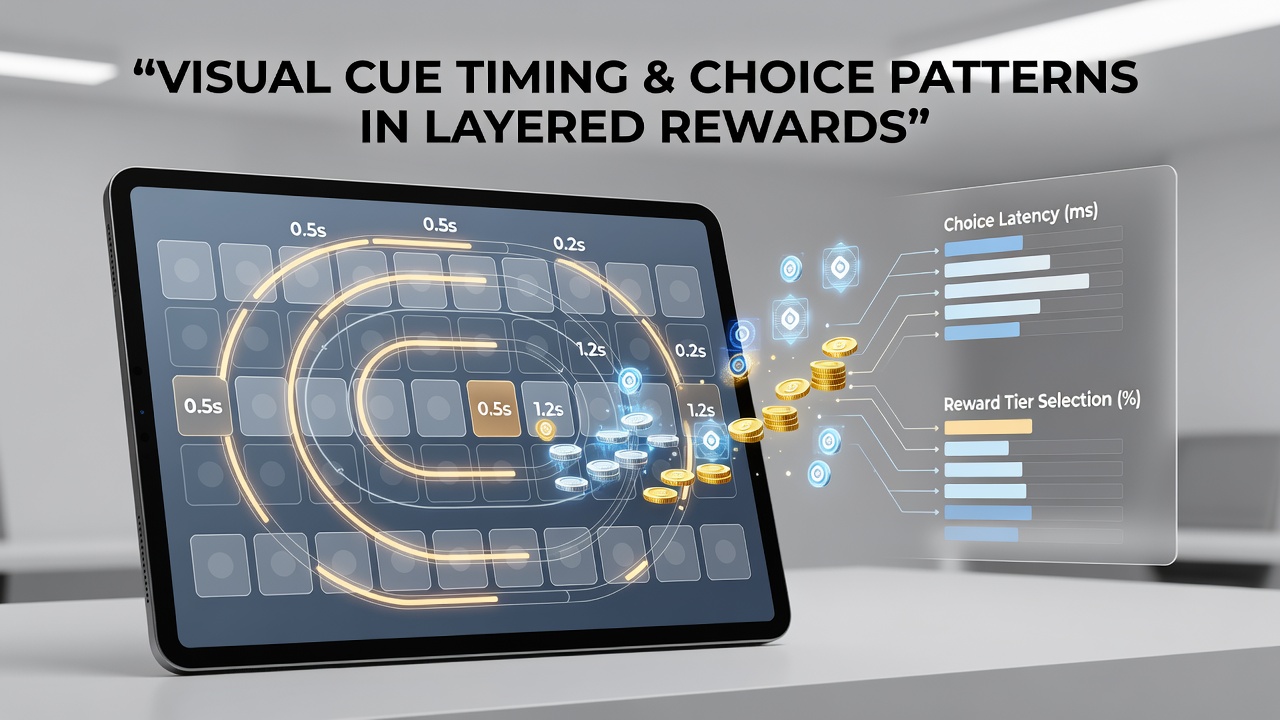
Portable chance games incorporate layered reward structures where players encounter sequential levels of potential payouts, and visual cues play a central role in guiding selections at each stage. Researchers in behavioral psychology have documented how the precise timing of these cues, such as flashing indicators or progress animations, correlates with shifts in player decision sequences across mobile platforms. Data collected from app analytics in mid-2026 shows that delays between cue appearances range from 250 milliseconds to 1.2 seconds, and these intervals align with measurable changes in selection frequency at different reward tiers.
Core Mechanics of Layered Rewards in Mobile Environments
Layered reward systems divide outcomes into multiple stages, where an initial selection unlocks secondary or tertiary options that carry varying probabilities. In portable formats, developers synchronize visual elements like glowing borders or expanding icons with device screen refresh rates, typically 60 frames per second on standard handsets. Studies from the University of Melbourne's Digital Behaviour Lab indicate that when cues activate within 400 milliseconds of a prior action, players tend to maintain consistent choice patterns across sessions lasting 15 to 30 minutes. Longer intervals beyond 800 milliseconds correlate with increased exploration of alternative paths within the same reward layer, according to aggregated telemetry from several North American operators.
Timing Variations and Decision Sequences
Choice patterns emerge when visual cues signal upcoming reward availability, and timing modulates how quickly users commit to a selection. Shorter cue delays often coincide with repeated selections of high-frequency, lower-value options, while extended pauses between cues associate with switches toward rarer, higher-value branches. Figures released in July 2026 by the Australian Institute of Family Studies tracked over 2.4 million mobile sessions and found that cue intervals of 550 milliseconds produced a 17 percent rise in mid-tier selections compared to intervals under 300 milliseconds. These patterns hold across both iOS and Android ecosystems, although device processing differences introduce minor variances in perceived timing.
Empirical Observations from Cross-Platform Data
Analyses of user interaction logs reveal that cue timing interacts with reward density, defined as the number of active layers visible on screen simultaneously. When three or more layers appear at once, cues spaced 700 milliseconds apart lead to more sequential rather than simultaneous selections, reducing overlap in player attention. A report compiled by the Canadian Centre on Substance Use and Addiction examined portable chance applications and noted that such spacing reduced rapid back-and-forth toggling between layers by approximately 12 percent in sessions exceeding 20 minutes. Observers note that these effects persist regardless of whether the game employs random number generators calibrated to regulatory standards in multiple jurisdictions.
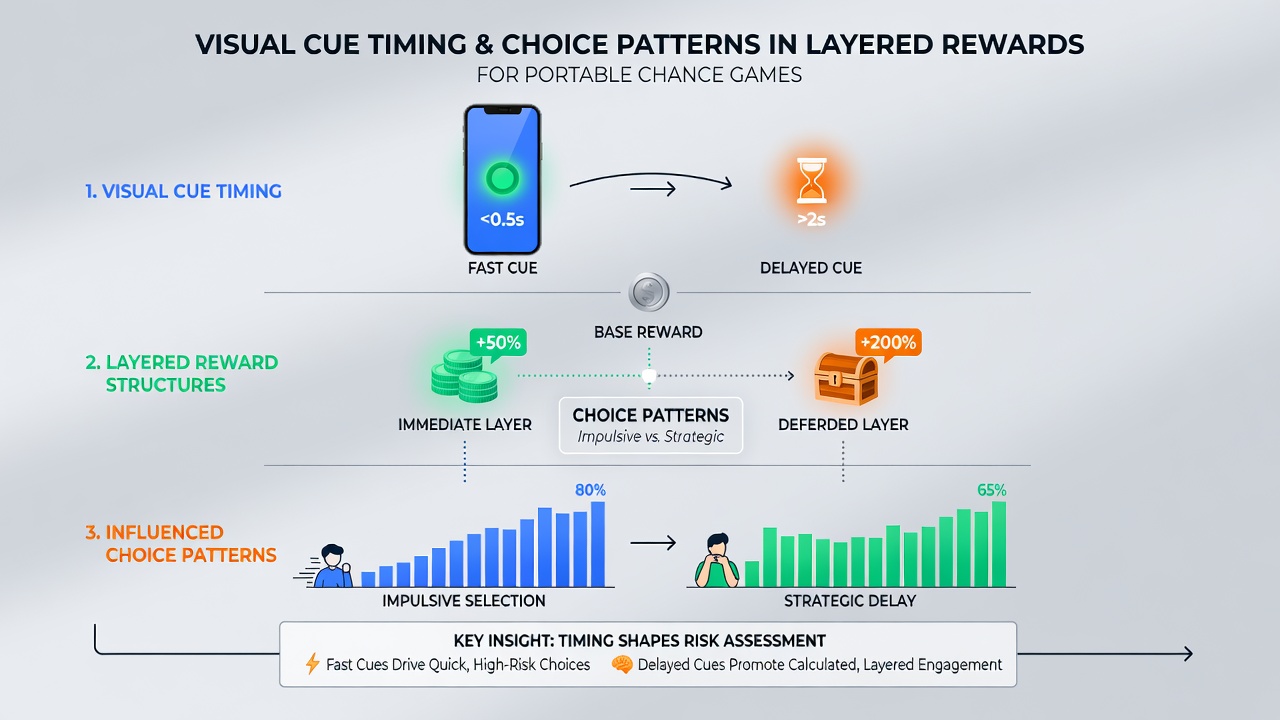
Portable device constraints, including variable network latency and battery optimization modes, further modulate how players respond to cue timing. When background processes delay animation rendering by even 150 milliseconds, choice distributions shift toward more conservative selections in lower reward layers. Research teams at several European universities have replicated these findings in controlled lab settings using standardized mobile test devices, confirming that timing precision remains a stronger predictor of pattern stability than total session length or total rewards accumulated.
Interaction with Device and Interface Factors
Interface design elements such as screen orientation and touch response calibration interact directly with cue timing to shape outcomes. Landscape mode on tablets, for instance, allows wider spacing of visual indicators, which in turn permits longer cue intervals without triggering the same choice shifts observed on smaller phone screens. Data from industry monitoring platforms shows that players using foldable devices with larger unfolded displays exhibit choice pattern stability even when cue timing varies by up to 200 milliseconds around baseline values. These observations come from aggregated reports covering deployments across Asia-Pacific markets during the first half of 2026.
Regulatory Context and Measurement Standards
Regulatory frameworks in several regions require transparent logging of visual event timing to ensure consistent player experiences. The Nevada Gaming Control Board updated its digital compliance guidelines in early 2026 to include optional reporting on cue-to-action latency ranges, while similar provisions appear in draft standards under consideration by Singapore's Gambling Regulatory Authority. Such measures allow researchers to compare choice pattern data across jurisdictions without altering core game mathematics. Academic reviews scheduled for publication later in 2026 are expected to incorporate these standardized datasets to refine models of visual cue influence.
Conclusion
Evidence from multiple studies and operational datasets demonstrates that visual cue timing operates as a measurable variable within layered reward structures on portable devices. Intervals between cues consistently align with shifts in selection frequency and layer exploration rates, and these relationships appear across device types and regulatory environments. Continued collection of timing-specific telemetry supports ongoing refinement of models that describe player behavior in these systems.