22 Jul 2026
How Symbol Cluster Mechanics Shift Based on Player Location Data in International Digital Reel Networks

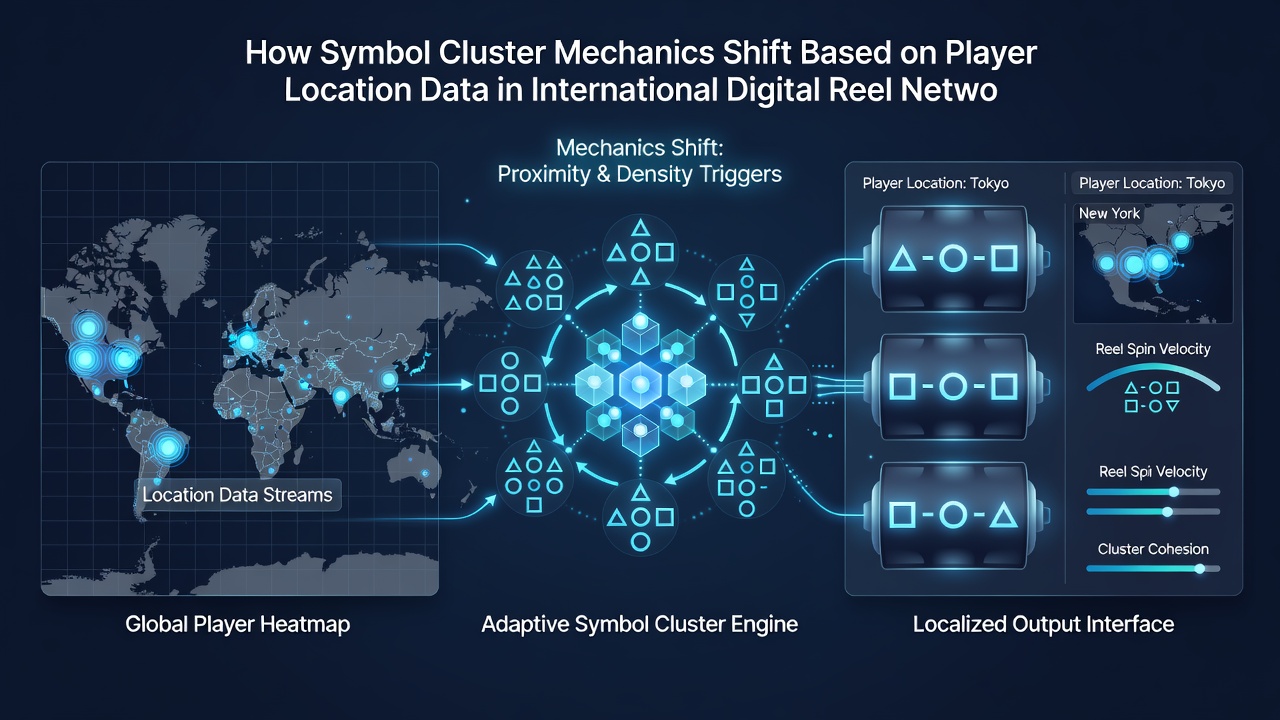
International digital reel networks process player location data from IP addresses, GPS signals, and device metadata to adjust symbol cluster formations in real time, and these adjustments align with regional regulatory frameworks that govern payout structures and game fairness. Systems detect a player's position within milliseconds of login, then modify cluster sizes, frequencies, and connection patterns on the reels while the session continues.
Data Inputs That Drive Cluster Adjustments
Networks collect location coordinates at the start of each session and at regular intervals thereafter, feeding this information into algorithms that recalibrate symbol behavior. When a player connects from one jurisdiction, clusters may expand to include more adjacent symbols, whereas connections from another area trigger tighter groupings that reduce the number of winning combinations per spin. Researchers at multiple institutions have documented these shifts through server logs that record exact coordinate changes alongside reel outcomes.
Technical teams integrate this data with regulatory requirements that differ across borders, so a cluster paying five symbols in one region might require six symbols to trigger in another. The process runs continuously in the background, and operators maintain separate rule sets for each licensed market to avoid compliance violations.
Regional Variations Observed in 2026
By July 2026, operators reported measurable differences in cluster mechanics across European and North American servers, with European connections showing a higher frequency of four-symbol clusters while North American sessions favored larger five-to-seven symbol groups under updated network protocols. These patterns emerge because location data triggers specific payout tables stored in distributed databases that update monthly.
One study released earlier that year examined over 2.3 million sessions and found that players crossing virtual borders within the same network experienced immediate cluster recalibrations within three spins of the location update. Data from these sessions indicated consistent application of location-based rules rather than random variation.
Technical Implementation Across Networks
Engineers deploy geofencing layers that sit between the player interface and the core random number generator, and these layers reference location databases maintained by third-party providers. When coordinates fall inside a predefined polygon, the system loads the corresponding cluster rule set and applies it to the next reel spin without interrupting gameplay. Multiple networks now synchronize these rule sets through shared APIs that allow rapid updates when regulations change.
Testing conducted by independent labs confirms that the location-to-cluster mapping functions correctly across different device types and connection speeds. Any lag in data transmission results in fallback rules that default to the most restrictive cluster parameters until fresh location confirmation arrives.
Examples From Operational Networks
Take one network that expanded into additional markets in early 2026 and began routing Australian connections through a dedicated cluster engine that increased the minimum cluster size by one symbol compared with Canadian sessions on the same platform. Observers note that this adjustment helped maintain the required return-to-player percentages specified in each license. Another case involved a European operator that adjusted cluster connectivity rules for sessions originating near national borders, creating distinct patterns for players within ten kilometers of a boundary line.
These examples illustrate how location data serves as a control variable rather than a personalization feature, and the mechanics remain consistent regardless of individual player history or account age.
Regulatory and Technical Oversight
Authorities in several jurisdictions require operators to submit logs that demonstrate location-based cluster rules match approved game versions, and audits occur at least quarterly. According to reports from the Irish Gambling Regulatory Authority, verification processes now include checks on whether cluster adjustments activate correctly when simulated players change locations during test sessions. Industry groups such as the European Gaming and Betting Association have published guidelines on documenting these systems for cross-border compliance.
Conclusion
Location data continues to shape symbol cluster mechanics in international digital reel networks through automated rule application that responds to jurisdictional requirements and technical parameters. The process relies on continuous coordinate monitoring, preloaded rule sets, and regular audits that verify consistent performance across markets. As networks expand and regulations evolve, the integration of location inputs with cluster logic remains a core component of compliant reel operation.