15 Jul 2026
How Interface Layouts Guide Decision Patterns During Extended Sessions on Hybrid Reel and Table Platforms Worldwide
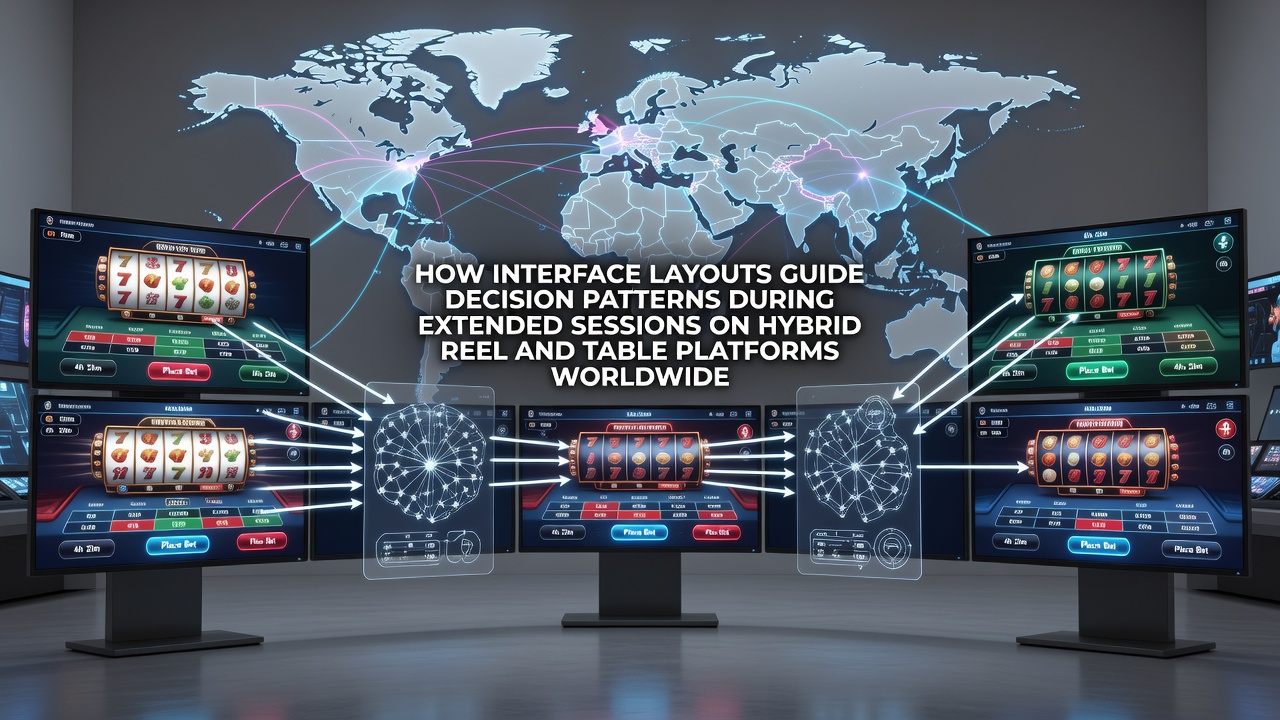
Interface layouts on hybrid reel and table platforms shape how users approach choices over long periods, and researchers have tracked these effects across multiple continents since the expansion of integrated digital systems. Platform designers arrange buttons, information panels, and navigation elements in ways that direct attention toward specific actions, such as adjusting stakes or switching between reel sequences and table simulations, while data from extended session logs reveal consistent patterns in timing and frequency of those decisions.
Layout Components That Shape User Choices
Central placement of action controls remains a standard feature on most hybrid platforms, and this positioning correlates with higher rates of repeated inputs during sessions that exceed 45 minutes according to aggregated operator data. Side panels that display recent outcomes or balance updates appear in configurations used by platforms operating in both North American and European markets, whereas bottom-screen histories receive more frequent glances in designs common to Asia-Pacific regions. Observers note that color gradients applied to bet adjustment sliders often align with escalation sequences, and users tend to follow these visual cues when extending play rather than resetting to default values.
Hybrid environments combine reel mechanics with table elements in single sessions, which means layout choices must accommodate rapid context switches, and studies of user navigation paths show that tabbed interfaces reduce the time between reel spins and card-based decisions by measurable margins. Fixed elements such as quick-bet presets occupy prominent screen real estate on many systems, and these presets correspond to steadier decision intervals once initial exploration phases conclude.
Patterns Observed in Prolonged Engagement
Extended sessions on these platforms produce distinct decision clusters, and heat-mapping analyses conducted by independent research groups indicate that attention concentrates around confirmation dialogs positioned near the primary action area after the first hour of continuous use. Users demonstrate increased reliance on auto-progression toggles when those controls sit within the central visual field, which alters the pace at which reel cycles and table rounds alternate. Data collected through July 2026 shows that platforms employing persistent balance meters alongside outcome histories sustain more uniform betting increments compared with layouts that hide balance information behind secondary menus.
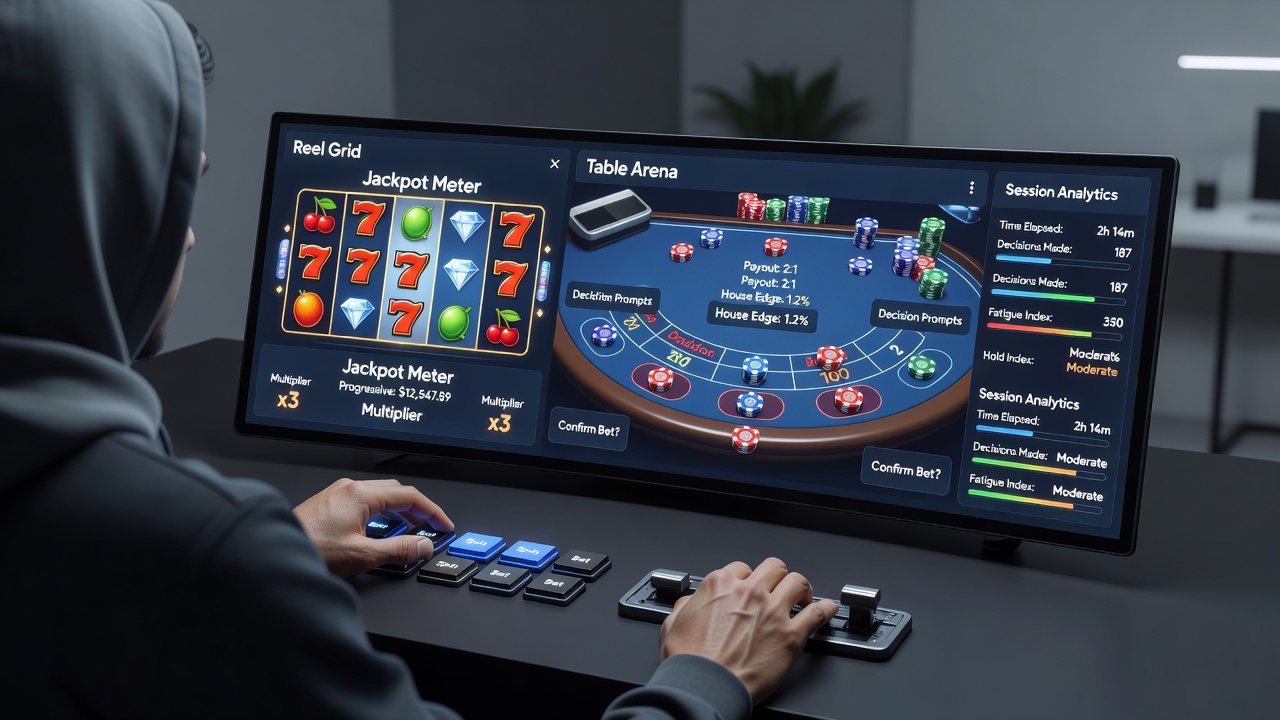
Decision timing shifts noticeably once fatigue indicators appear in session telemetry, and layouts that keep rule summaries or payout tables one click away correlate with fewer abrupt strategy changes in later stages. Those who study cross-platform usage report that consistent iconography across reel and table modules supports smoother transitions, whereas inconsistent labeling increases the likelihood of mid-session pauses or reduced stake adjustments.
Global Design Variations and Their Effects
Regional regulatory frameworks influence how much information appears on screen at once, and platforms serving Canadian markets often incorporate clearer session timers within the main layout grid, while Australian operators emphasize outcome frequency indicators near the primary controls. European systems frequently integrate responsible play prompts as collapsible modules rather than persistent overlays, and this choice aligns with different distributions of session length data. Research indicates that such variations produce measurable differences in how frequently users modify parameters after the 90-minute mark.
Industry reports from organizations including the Australian Institute of Criminology document how these layout decisions interact with local player demographics, and similar findings appear in analyses from North American academic centers focused on digital interface ergonomics. The placement of confirmation steps before large stake changes shows regional divergence as well, with some jurisdictions requiring explicit visual separation that in turn affects the rhythm of decisions during extended periods.
Telemetry Insights Across Markets
Session data aggregated from multiple operators reveal that layouts featuring grouped controls for reel and table functions experience steadier transition rates between game types once users pass the initial 30 minutes, and this pattern holds across time zones. Visual hierarchy applied to multiplier displays or progressive elements influences whether participants maintain prior stake levels or explore alternatives, and researchers tracking these movements note stronger effects when the hierarchy remains stable throughout the session.
Platforms that refresh outcome panels at fixed intervals rather than on every result produce different scanning behaviors in long sessions, and the resulting decision trees appear in published case studies from university laboratories examining human-computer interaction in gaming contexts. Those patterns contribute to broader understanding of how spatial arrangement guides sustained interaction without requiring changes to underlying game mathematics.
Conclusion
Interface layouts on hybrid reel and table platforms continue to direct decision sequences through consistent spatial and visual strategies, and global data collected through mid-2026 confirm that these arrangements produce repeatable effects on timing, stake modification, and game-type switching during extended use. Regional adaptations reflect regulatory environments while preserving core principles of information hierarchy that shape user behavior across markets.