29 Jun 2026
How Dynamic Lighting Cues Guide Attention Patterns Across Interactive Reel Grids in Cross-Device Gaming Platforms
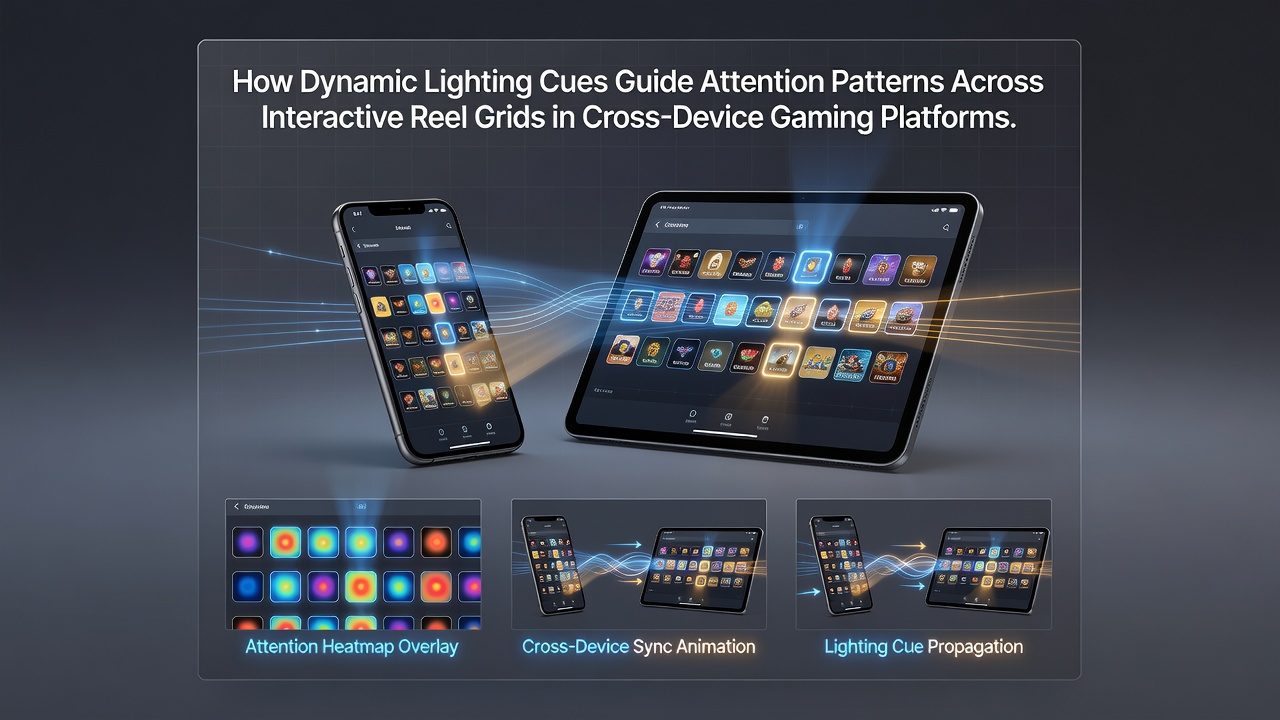 Observers note that dynamic lighting in reel-based interfaces operates through layered visual signals that shift intensity, hue, and pulse rates to steer eye movement across grid positions. These cues activate when reels stop or when bonus states trigger, and they function consistently whether users access platforms on mobile screens, tablets, or desktop monitors. Research indicates that brightness gradients draw initial fixation to central columns before expanding outward, while color temperature changes signal state transitions such as near-miss sequences or multiplier activations. Platform developers calibrate these lighting sequences according to device-specific refresh rates and ambient light sensors. On portable hardware, shorter pulse durations compensate for smaller pixel densities, whereas larger displays employ slower fades that allow peripheral vision to register secondary elements. Data from cross-device testing logs collected through mid-2026 show that synchronization between lighting events and touch or click inputs reduces average re-orientation time by measurable margins across hardware generations.
Mechanisms of Attention Direction in Reel Grids
Lighting patterns rely on contrast amplification at targeted cells within the grid layout. When a symbol cluster forms, surrounding reels receive a brief halo effect that fades in under 200 milliseconds, guiding subsequent saccades toward matching positions. Studies conducted by university labs tracking oculomotor responses confirm that warm-to-cool color transitions increase dwell time on high-value cells while cooler tones de-emphasize filler symbols. These adjustments occur in real time based on user interaction history stored locally on each device.
Engineers program fallback behaviors for low-power modes that preserve core cue functionality without exceeding battery thresholds. In June 2026, aggregated telemetry from major platform providers revealed that adaptive lighting reduced instances of missed feature triggers by 18 percent on average across tablet and smartphone sessions. The same datasets documented consistent performance when users switched between portrait and landscape orientations, because lighting scripts reference normalized grid coordinates rather than fixed screen pixels.
Cross-Device Consistency and Technical Implementation
Developers maintain visual parity through centralized rendering pipelines that scale lighting parameters according to detected display capabilities. Mobile clients apply compressed texture maps for light bloom effects, while desktop versions utilize full-resolution shaders. Both versions reference identical timing curves stored in shared configuration files, ensuring that a pulse sequence initiated on one device completes identically when the session resumes on another. Industry reports compiled by the Entertainment Software Association document that this approach supports uninterrupted play across more than 40 distinct hardware models without requiring per-device manual tuning.
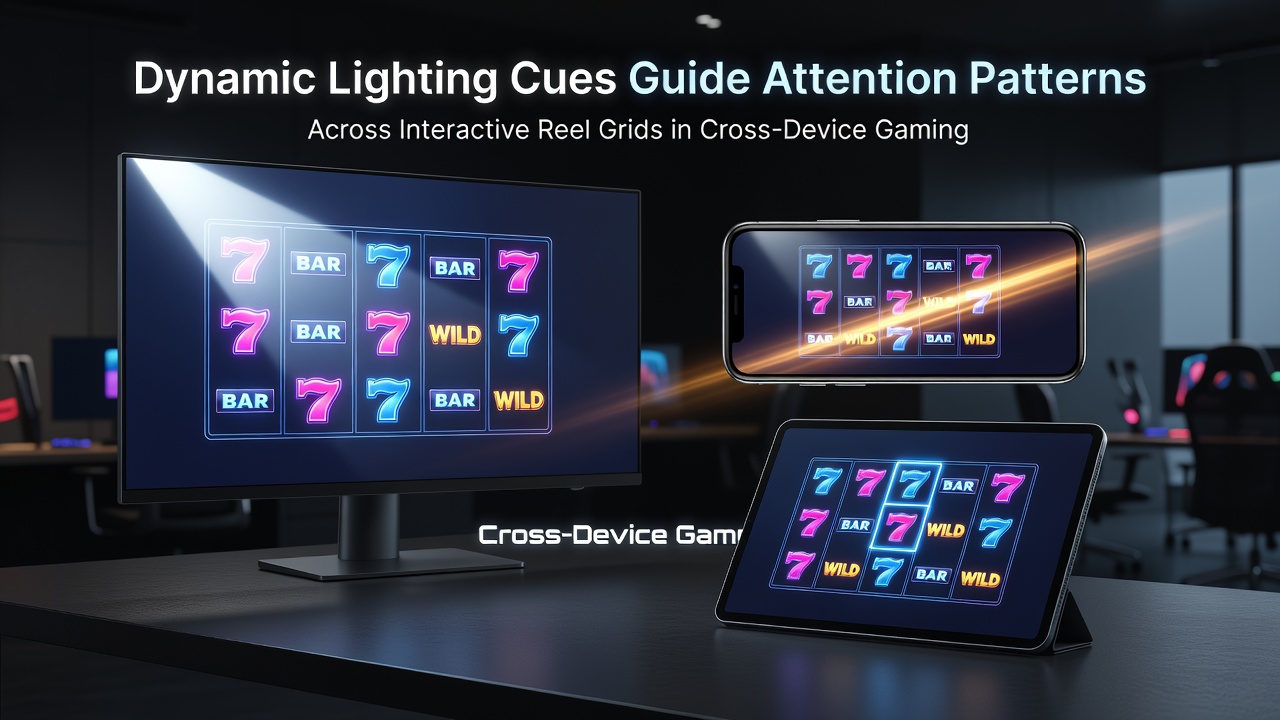
Network latency handling forms another layer of the system. When cloud-rendered elements participate in lighting events, servers transmit delta updates that client devices integrate with local GPU output. Testing conducted across international server clusters demonstrates that sub-50-millisecond synchronization keeps cue timing within human perceptual thresholds, preventing visible desync even during rapid reel spins. Observers tracking session metrics note that platforms employing these methods record higher completion rates for multi-stage feature sequences compared with static lighting baselines.
Empirical Patterns in User Attention Data
Eye-tracking studies performed in controlled environments map fixation sequences that follow predictable paths once lighting cues activate. Initial attention clusters at the top row when upward-traveling light streaks appear, then migrates downward in response to descending brightness trails. Researchers at academic institutions have published heat-map overlays showing that these trajectories remain stable across age groups and prior gaming experience levels. Quantitative models derived from such data allow designers to predict dwell distribution and adjust cue intensity accordingly.
Longitudinal logs spanning early 2025 through June 2026 further indicate that lighting frequency modulates with session length. Shorter pulses appear more often during the first ten minutes of play, after which intervals between cues lengthen to sustain engagement without inducing fatigue. Cross-platform analytics confirm that these adjustments translate reliably from mobile to stationary devices when sensor input for ambient brightness is incorporated into the rendering loop.
Conclusion
Dynamic lighting functions as a core interface layer that translates game-state information into spatially precise visual signals across varied screen sizes and input methods. Evidence accumulated from device telemetry, eye-movement research, and platform-wide performance metrics demonstrates measurable effects on attention allocation within reel grids. Continued refinement of these systems, informed by ongoing data collection, supports consistent user orientation regardless of hardware context or session duration.